
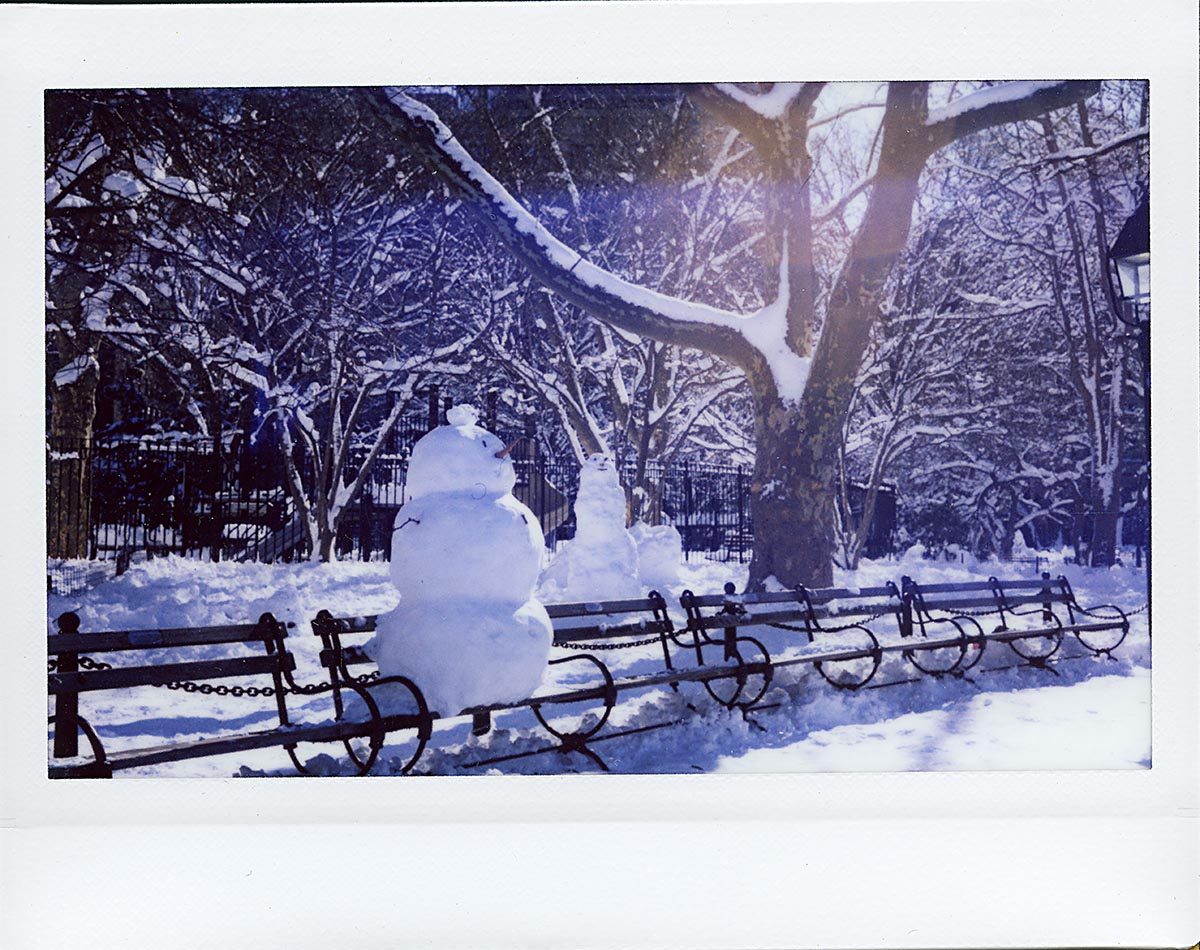
As wonderful as instant film is (and it IS wonderful, friends, a miracle of modern chemistry), it’s one downside is that it’s extremely temperature dependent. In order for the chemicals that are being spread across the exposed emulsified layer of the print to perform their magic, they can’t be too hot or too cold. If you’ve ever used Polaroid or Instax film on a cold day, you know all about this, as you probably had to keep your developing prints safe from the cold by warming them in your coat pockets as soon as they popped out of your camera.
Unfortunately, once the temperature drops below freezing, it doesn’t matter how deep your coat pockets happen to be. If you keep a camera loaded with instant film outside when it’s 20 degrees Fahrenheit for more than a few minutes, your film pods—where the developing chemistry lives until it’s ready to be spread—will freeze, ruining your film. Doesn’t matter what type of film you’re using; Instax is just as susceptible to freezing as Polaroid film is. However, there is a neat little trick you can use to keep your film from freezing if you’re shooting Instax in a Polastax Instax Wide film holder and a Polastax converted Polaroid Land Camera.
Unlike a “fully” converted Instax / Polaroid hybrid camera, a Polastax converted Polaroid pack film camera can’t develop film, so the process of taking a picture is a little different. You insert a Polastax Instax Wide film holder that’s loaded with film into the film compartment of your Polastax converted camera, open the holder’s dark slide, take your picture, close the dark slide, and remove the holder from the camera. The film in that holder gets developed later in an Instax developer, either a rewired Instax 210, a functioning Instax camera, or an old Polaroid 545i holder.
And here’s the beautiful thing about developing your Instax film outside of the camera you’re using: on a very cold day, it’s super easy to keep your film warm!
Ever used a chemical hand warmer like the ones they sell at hardware stores and pharmacies? If you’d like to use your Instax Wide film on a day when the temperature is below freezing, you take your Polastax Instax Wide film holders—let’s say you have five of them loaded and ready to go—and pop those into your camera bag along with an activated chemical hand warmer. Now it doesn’t matter how cold your camera gets because your film is protected, and as long as you’re careful about how long each holder stays outside of the camera bag, your Instax film pods won’t crystallize. How do we know this will work? Because we’ve done it, and here’s the proof:
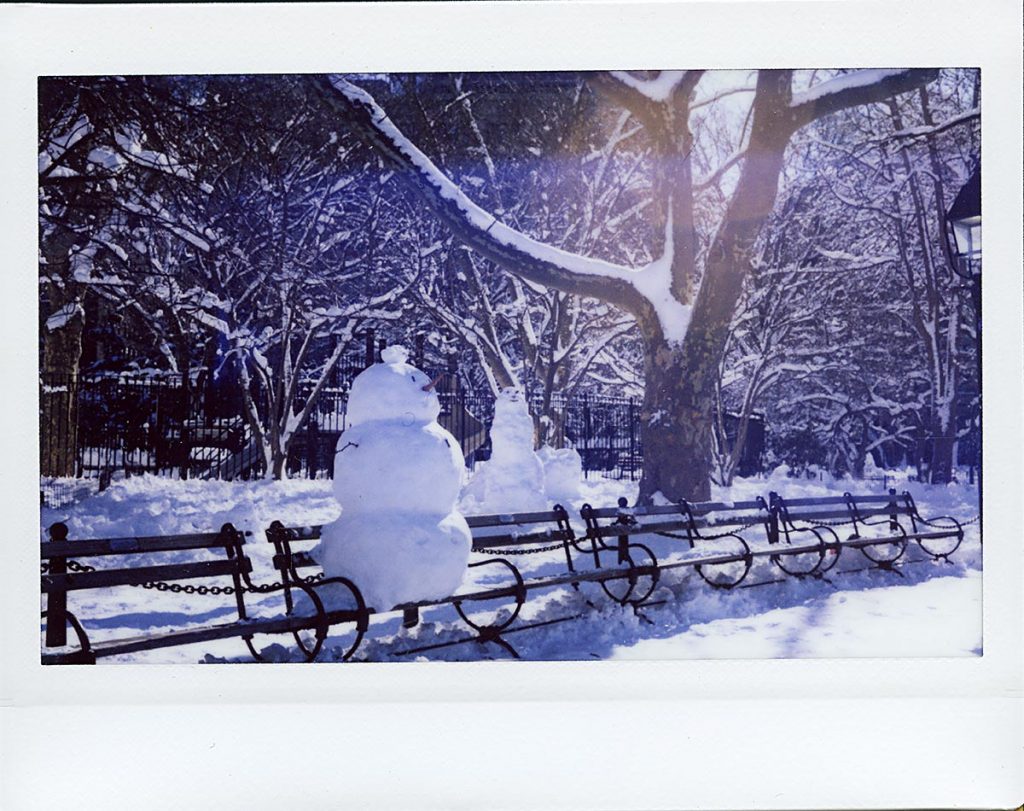
The above image was taken in Washington Square Park in NYC a few days after a snowstorm. The official temperature was 22 degrees Fahrenheit.
One caveat here: just as your film can get too cold, it can also get too hot. In an enclosed camera bag, an activated chemical hand warmer or similar warming mechanism may generate too much heat, so it’s a good idea to monitor the temperature in the bag by putting your hand in there periodically or unzipping the bag partway, every once in a while, to let the interior cool off a little. As with all things analog, it’s best to test your setup first; try it without the film just to make sure you’ve got the details worked out.
That’s all there is to it! Now get out there and shoot some Instax already!